Seborrheic Dermatitis & Dandruff
Seborrheic dermatitis is one of the most common chronic skin conditions, characterised by skin inflammation, flaking and redness in oil-gland-rich areas — mainly the scalp, face, upper chest and back. It is both a medical and an aesthetic problem: beyond the physical discomfort of itching, burning and dryness, it can significantly affect quality of life, self-confidence and social functioning.
It is a multifactorial condition that develops from a combination of overactive sebaceous glands, the presence of and an inflammatory response to the Malassezia yeast, and various environmental and hormonal factors. The condition appears at any age — from infancy to adulthood — with a peak in adolescents and young adults.

How common is it, and who is at risk?
Seborrheic dermatitis is a very common skin condition. Its mildest form is scalp dandruff, which appears in up to 50% of the adult population during life. The condition itself is diagnosed in about 1%–3% of the general population, with a peak between ages 20–40 and a higher prevalence in men. Among infants it is especially common in the first year of life ("cradle cap"), with a prevalence ranging from 10% to 70%. It also appears at an increased rate in patients with neurological diseases such as Parkinson’s or in states of immune suppression such as HIV.
Causes & pathogenesis
- There is no single cause; it combines:
- Excess skin oil and increased sebum secretion
- An over-reactive inflammatory response to the Malassezia yeast, which thrives in an oily environment
- Environmental factors and psychological stress
- Genetic factors — a familial tendency
- In infancy, a hormonal trigger originating in pregnancy/birth is possible
- Seasonal cold and dryness
- Harsh detergents/chemicals
- Certain hair products and medications (lithium, psoralen)
- Neurological diseases such as Parkinson’s
Symptoms — how it looks and where it appears
- Yellowish or white flakes on the scalp
- Redness and inflammation of the scalp skin
- Significant itching and sometimes a burning sensation
- Dry, peeling skin in the affected areas
- In infants: "cradle cap" — thick, yellow scales
- In severe cases: temporary hair shedding
- Common sites: scalp and hairline, eyebrows, sides of the nose, ears, beard, upper chest/back and skin folds
When to see a doctor
Signs that call for a prompt assessment by a specialist dermatologist.
No improvement after using a suitable shampoo
Red, painful lesions or lesions with discharge
Extensive involvement, impaired quality of life
In infants with widespread involvement
Diagnosis & differential diagnosis
- A clinical examination by a dermatologist
- Identifying the characteristic signs — flaking and redness
- A detailed history of the symptoms
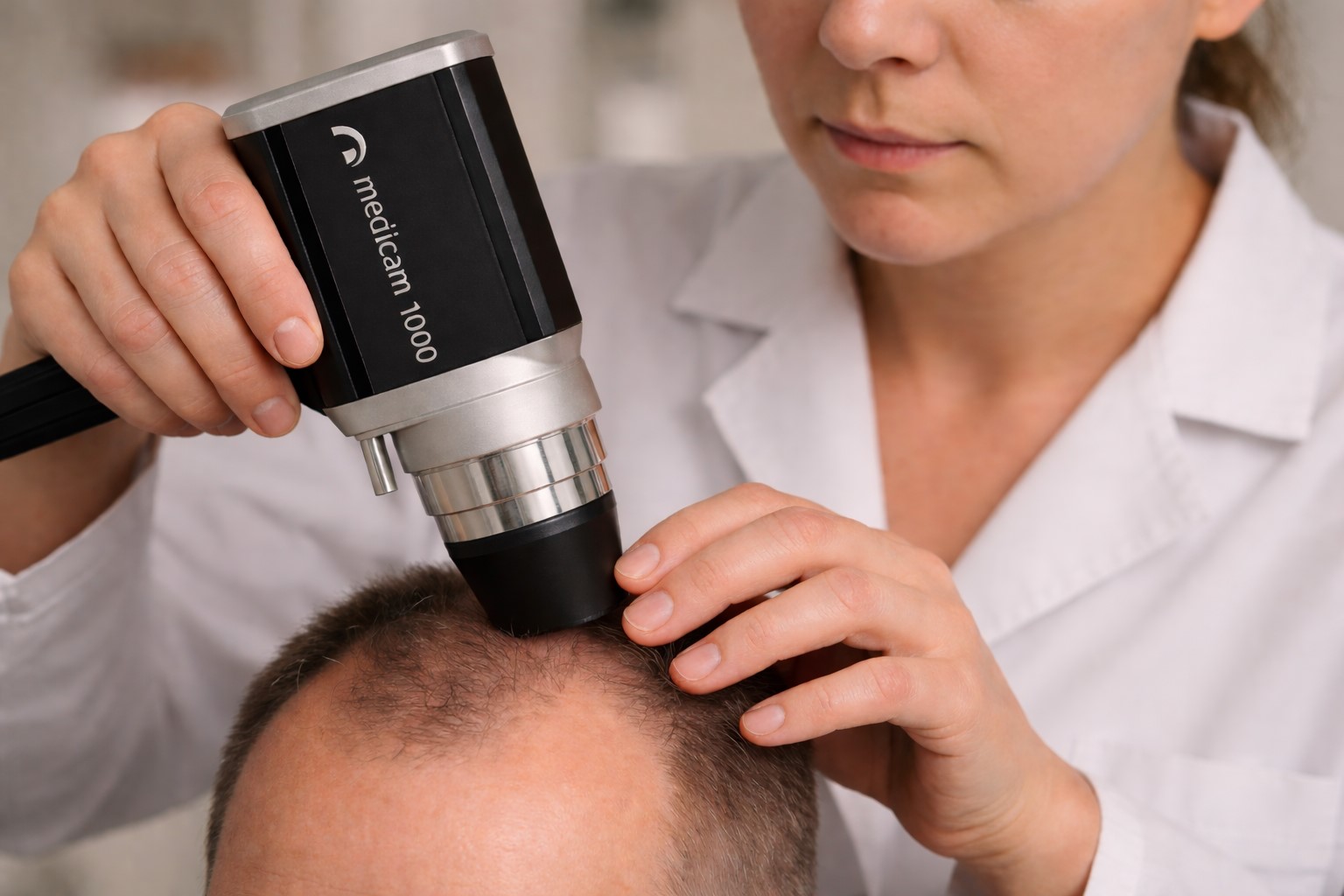
- Dermoscopic examination to detect inflammation
- Ruling out similar conditions such as psoriasis, rosacea, tinea versicolor, candidiasis, impetigo and lupus
- In rare cases: microscopic examination of the scales
Treatment — by severity and location
Scalp:
- Over-the-counter shampoos
- Prescription treatment: concentrated antifungal shampoos, topical steroids, and sometimes UVB phototherapy or systemic treatment
Face & body:
- Antifungal creams
- Mild steroids for a short course
- Calcineurin inhibitors as a steroid-sparing alternative
- In difficult cases: a short course of oral medication, phototherapy
Relation to hair loss
As a rule seborrhea does not cause hair loss directly, but prolonged itching and inflammation may lead to temporary shedding or hair thinning until the inflammation resolves.
Long-term prevention & management
- To maintain control of the condition:
- Regular use of a suitable shampoo, also during symptom-free periods
- Avoiding aggressive cosmetic products
- Maintaining good scalp hygiene
- Reducing stress and getting enough sleep
- Protecting against harsh weather
- Consulting a doctor at any worsening
- Adapting the treatment to the seasons
In summary
Seborrheic dermatitis and dandruff is a condition that requires professional, individually tailored treatment. At our clinic we provide accurate diagnosis and advanced treatment, while safeguarding patient safety and giving continuous medical follow-up to achieve the best possible results.
Frequently asked questions
Seborrheic dermatitis is a very common skin condition. Its mildest form is scalp dandruff, which appears in up to 50% of the adult population during life. The condition itself is diagnosed in about 1%–3% of the general population, with a peak between ages 20–40 and a higher prevalence in men. Among infants it is especially common in the first year of life ("cradle cap"), with a prevalence ranging from 10% to 70%. It also appears at an increased rate in patients with neurological diseases such as Parkinson’s or in states of immune suppression such as HIV.
As a rule seborrhea does not cause hair loss directly, but prolonged itching and inflammation may lead to temporary shedding or hair thinning until the inflammation resolves.
You can book a personal consultation with Dr. Rimma Laufer Britva in Kfar Saba via the website form or a WhatsApp message. The consultation includes an accurate diagnosis and a personal treatment plan.