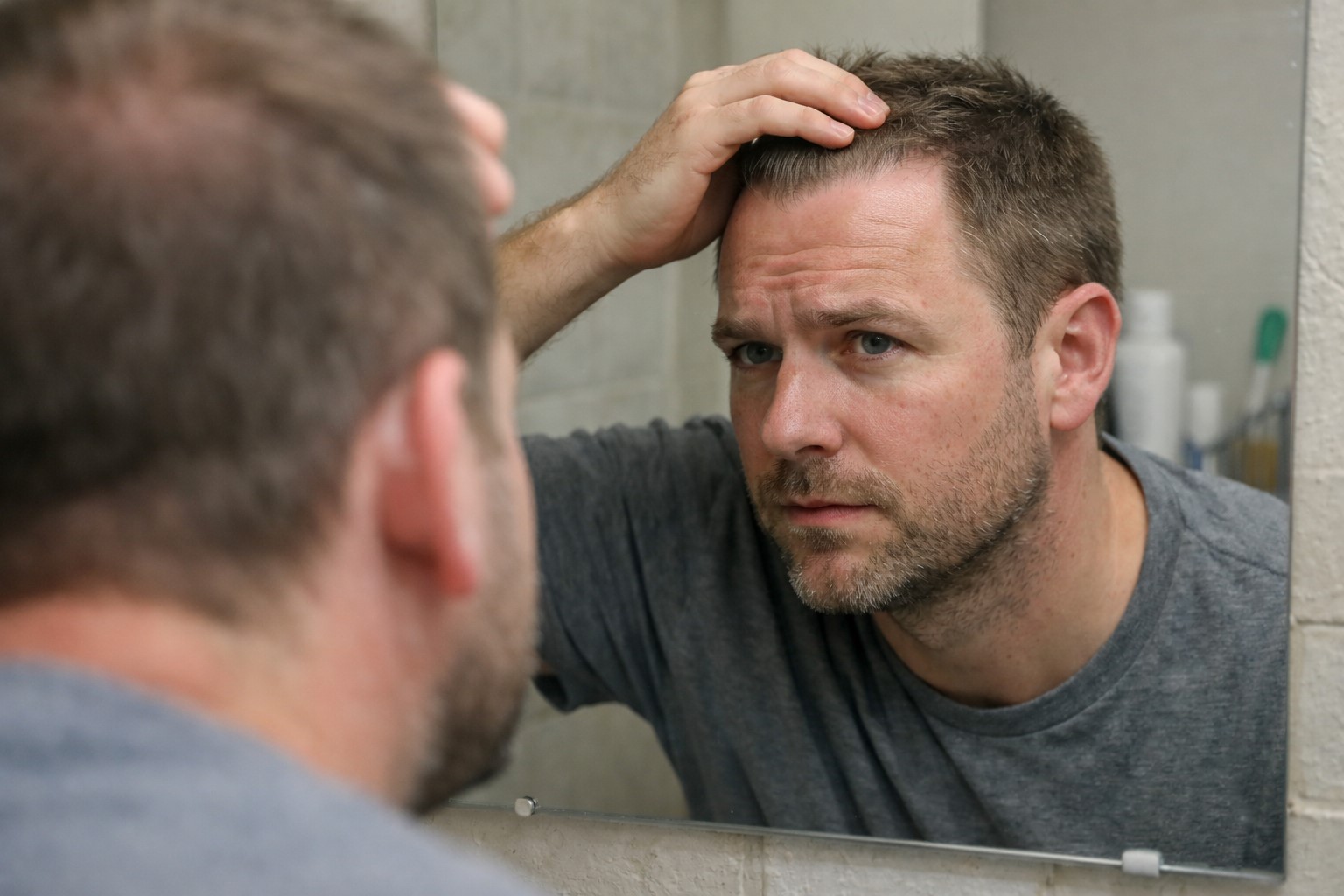
Folliculitis Decalvans
Folliculitis decalvans is a rare, chronic skin disease that mainly affects the scalp, but sometimes also other areas such as the beard, armpit or groin. It is a type of scarring hair loss, in which the hair follicles are destroyed and replaced by scar tissue — leading to irreversible hair loss.
The name derives from the Latin: decalvans — "makes bald".

Who may be affected?
- The disease is very rare and makes up a small percentage of all cases of scarring hair loss
- It mainly occurs in young and middle-aged men, but can also appear in women
- It has been documented somewhat more among African-American populations
- Cases in children are extremely rare
- It sometimes appears in families, suggesting a possible genetic predisposition
Signs and symptoms
- Pus-filled pustules around the hair follicles
- Redness, swelling, crusting and flaking on the scalp
- Pain, itching, a burning or tightening sensation in the skin
- Spontaneous bleeding or local tenderness
- A "tufting" phenomenon — several hairs emerging from the same follicle, an appearance reminiscent of a "toothbrush"
- Progression to irregular hair loss, with scarred, smooth bald patches
Diagnosis
Clinical and dermoscopic examination of the scalp
A culture from the pustules to identify bacteria
Skin biopsy
a critical examination that demonstrates neutrophilic inflammation and destruction of the follicles
Ruling out similar diagnoses such as lichen planopilaris, discoid lupus, scalp ringworm or folliculitis keloidalis
Treatment
There is no fully curative treatment, but there are ways to reduce inflammation, slow the disease and preserve existing follicles.
- Systemic antibiotics
- Topical treatments
- Topical or injected steroids
- Photodynamic therapy
- Biologic / immunomodulatory treatments
- Hair transplantation: possible only after years of complete remission, in order to avoid destruction of the transplanted follicles
Prognosis and impact on quality of life
The disease runs in waves — flare-ups and remissions. Hair loss is permanent and scarring in most cases. There is a significant impact on self-image and it may lead to anxiety or depression. Aesthetic measures can help: wigs, scalp micropigmentation, and transplantation in suitable cases.
What causes the disease?
- The exact cause is unknown, but there is evidence that it is an immune over-reaction to the bacterium Staphylococcus aureus — a bacterium naturally present as part of the normal skin microbiome. In some people its presence triggers abnormal, persistent inflammation that leads to destruction of the hair follicles and to scarring.
- A hereditary predisposition. Certain findings indicate that genetic factors may increase the risk of developing folliculitis decalvans.
In summary
Folliculitis decalvans is a rare but significant inflammatory disease that damages the hair follicles and causes permanent scarring hair loss. Early diagnosis and combined treatment can reduce disease activity, preserve existing hair and improve the patient’s quality of life.
Frequently asked questions
The disease runs in waves — flare-ups and remissions. Hair loss is permanent and scarring in most cases. There is a significant impact on self-image and it may lead to anxiety or depression. Aesthetic measures can help: wigs, scalp micropigmentation, and transplantation in suitable cases.
You can book a personal consultation with Dr. Rimma Laufer Britva in Kfar Saba via the website form or a WhatsApp message. The consultation includes an accurate diagnosis and a personal treatment plan.